


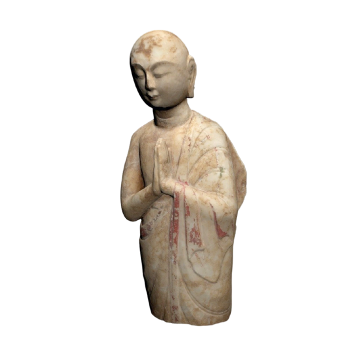
White White Jade Standing Arhat Statue
This is a Chinese Northern Qi period (550-577 AD) white marble standing arhat statue. According to art historians, such images of young monks are often considered to be Ananda (Ānanda), one of the ten disciples of the Buddha. The style of the statue dates back to the 6th century AD China's Northern Qi Dynasty, and the art of this period is known for its serene, introspective expressions and smooth lines of clothing. It has the classic "Oriental smile", reflecting the peak level of Buddhist art at that time. The statue is carved from high quality white marble.
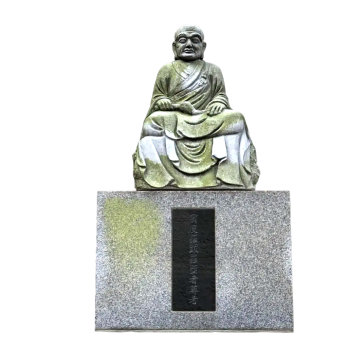
Buddhist Cultural Heritage BINDROO BACHROA
Bindu Luo Duoza (Pindola Bharadvaja) is an arhat in Buddhism. According to the earliest Buddhist scriptures in India, Bindu Rojama was one of the four arhats who the Buddha asked to remain on earth to promote the Dharma. Each of the four arhats corresponds to the four directions. Binduro is known for his mastery of occult and supernatural powers. Together with Ananda, he preached to women twice in the palace of Yutuoyan in Sami. In later centuries, the number of arhats increased from four to sixteen and eventually to eighteen. In Tibetan thangka paintings, Binduo Luo Luoga usually hands

The Bamboo Root Carving Arhat, a Lucky Lion, was created by Liang Fengzhu
Ruishi Luohan Bamboo Root Carving, a 1999 work by Liang Fengzhu, a master of Chinese arts and crafts. It is currently collected in the Liangfengzhu Arts and Crafts Museum in Nanyue, Hengyang, China, with a height of 21 cm and a width of 23.2 cm

Standing Arhat, a statue in the Song Dynasty
This Chinese cultural relic is a sculpture named "Upright Arhat", which is a Chinese work in the 6th century AD. This sculpture is currently housed in the Minneapolis Museum of Art in the United States.

Popular Models
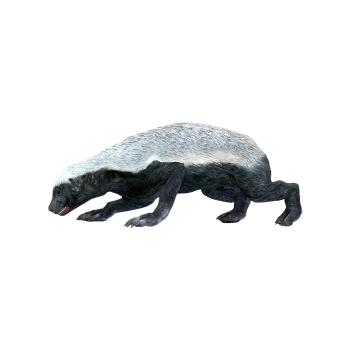
Honey Badger (3D animated model)
192 View
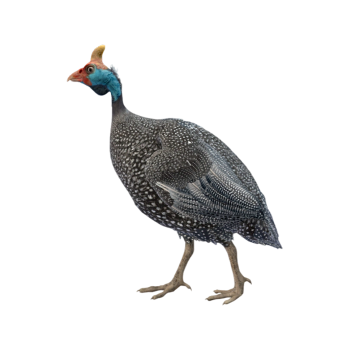
Guinea fowl (3D animated model)
163 View
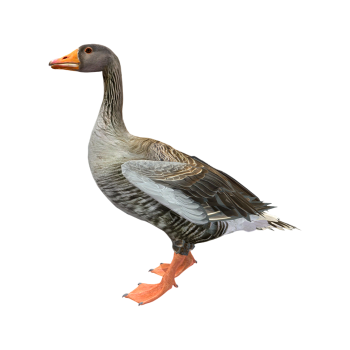
Wild Goose (3D animated model)
185 View
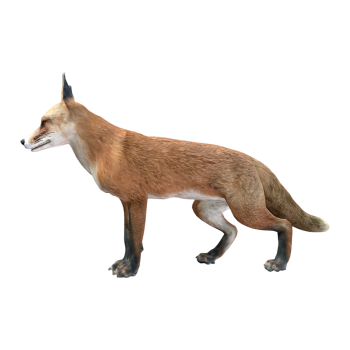
Red Fox (3D animated model)
153 View
Random Model

Pomegranate
344 View

Carrot
569 View
Guinea fowl (3D animated model)
163 View

Plum
169 View
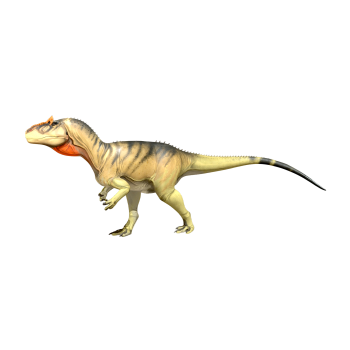
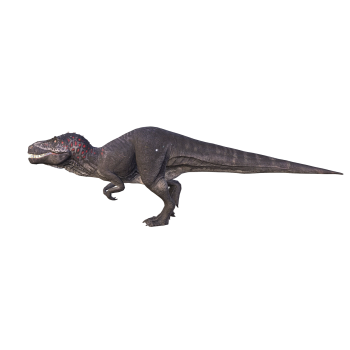
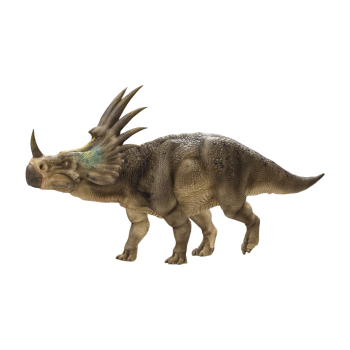
Halosaurus (3D animated model)
100 View
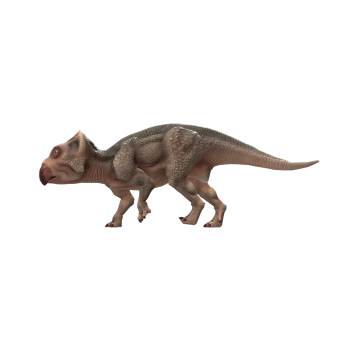
Fiber Hornstrone (3D animated model)
141 View